Yes, yes, covering "Plastic Ono"-era John Lennon for a Save Darfur album is just about the definition of "not punk rock." Y'know what else is "not punk rock?" Going around saying stuff is "not punk rock." At this point, it shouldn't come as any surprise that GreenDay can put together a metal-tinged mini-epic - but for some reason you still kinda say "This is who? Seriously? Wow."
Anyway; great song, great cover, great cause, great job. It being no secret that there is something really, really wrong with my wiring, however; the first time I heard it the idea immediately popped into my head to make an I'm-mostly-kidding-but-also-maybe-kinda-serious hagiographic music video tribute to the Super Mario Bros. Because they're blue-collar plumbers, see.. and also heroes. And because I grew up in the 80s and have a profoundly skewed way of mentally sorting-out the world around me.
So I did. Enjoy!
Tuesday, 22 May 2007

DEVIL DOG: THE HOUND OF HELL

TYPICAL REVIEW
"It could be pretty creepy ... if it weren't so darn stupid." - Scott Weinberg, DVDTALK.COM
THE PLOT
A coven of satanists devise a scheme to cross breed a German Shepherd with Lucifer resulting in the birth of a litter of devil dogs. (That's as logical as it's gonna get, folks.) One of the evil pups is adopted off to the Barry family, who can't seem to understand why everyone but themselves finds the little nipper so darn creepy. It's not long before the Devil Puppy unleashes the dread power of its glowing green eyes on the family's devout Catholic maid, whose subsequent death is considered an accident by the Barrys. These kinds of "accidents" continue 0ver the next year or so as the dog slowly seduces mom and the kids over to the dark side. Dad, however, ever so slowly grows suspicious of the family pet, especially after the Devil Dog tries to convince him to put his own hand into the lawn mower. Not knowing where else to turn in order to defeat Satan, the beleaguered father cries out to God to... no wait, that's not what he does. The father flies to Ecuador so a tribal shaman can tattoo his palm. (Take that Satan!) With the Evil One's doom in hand, literally, Dad lures the Devil Dog into a final confrontation.
THE POINT
I have to admit I had high expectations for Devil Dog as the movie has, for lack of a better way of putting it, something of a pedigree. The director, Curtis Harrington, was a genre veteran who helmed such dubious achievements as Voyage to the Prehistoric Planet, Ruby, and Whoever Slew Auntie Roo? Better yet, Devil Dog was written by The Karpfs, the same team who scripted Gargoyles (hands down one of the best made-for-TV horror films of the 70s) and A Cry In The Wilderness (hands down THE best man-bitten-by-a-rabid-skunk movie ever filmed.) The acting credits were also solid with Richard Crenna, Yvette Mimieux, and Martine Beswick, all beloved genre stars. Heck, you even had Ike Eisenmann and Kim Richards (Tony & Tia from Disney's Witch Mountain movies) once again playing brother and sister. And even if it didn't have all of that, it's still a movie about a DOG FROM HELL, which you think would guarantee a little cinematic fun.
But it doesn't, at least not enough. First off there's the not-so-special effects. It's not just that they're sub-par (that's often part of the fun of these movies, i.e. Robot Monster), it's that there shouldn't be any to begin with. If you think back on all of the effective devil-type movies, the horror is almost always in the suggestion of the evil rather than in the showing. Rosemary's Baby gives you only one blurry close-up of some devil-eyes and a claw. The Omen has the weirdest kid ever, but no monster. Night Of The Demon doesn't have one shot of the creature until the very last scene, and even then it might be a hallucination. Even The Exorcist, which does go full blown with the makeup and pea soup near the finale, spends most of its time in an excruciating build-up. It's frustrating, because the creepiest scenes in Devil Dog are exactly the ones that show the hound doing nothing but standing there watching, studying, plotting. (One of my cats does this a lot. Between that and the hairballs I'm beginning to question its origins.) Rather than stick with what works, however, the filmmakers decided what Devil Dog really needed was lime green glowing eyes, which appear whenever he's exerting his will. It's a real mood killer. And the less said about the dog's transformation at the end, the better. Let's just say that if a dog in a fright wig and plastic horns is the best Satan can do, he's been seriously overrated all these years. (And he probably really wears that red spandex body suit too.)
The effects would probably be more bearable if the story made a bit more sense. The script really feels like a rushed first draft, like an initial run through just to get the basic ideas on paper. Episodes are strung together piecemeal, with awkward transitions that jolt you right out of the story. The scene in which the family discovers the charred body of their maid is immediately followed by a scene of the family getting out of the car laughing and carrying on like nothing just happened. You spend a couple of minutes thinking what cold hearted cretins these people are before you learn that a year has passed for the characters. Occasions where the father discovers terrible things are happening in his household (the kids are caught scrawling images of demons on the walls, his loving wife informs him she's now the town tramp, his family reacts to the neighbor's death with scorn and laughter) are followed by moments of startling blandness. Where most movies try to escalate the tension as they speed to a conclusion, Devil Dog stumbles and lurches, never gaining any momentum.
And that's a shame, because Devil Dog actually has a good central idea, one not even touched on in it's big budget predecessors like The Exorcist or The Omen. In those films, Satan is pretty much in your face, trying to accomplish his goals by a show of power. But as Cardinal Jorge Arturo Medina Estevez, Prefect of the Congregation for Divine Worship and the Discipline of the Sacraments (His business card must be the size of a postcard.) pointed out on the release of the New Rite of Exorcism in 1999, "Diabolical obsession is not the most frequent way the spirit of darkness exerts his influence...the harmful influence of the Devil and his evil spirits is normally exercised through deception, falsehoods, lies, and confusion."
In Devil Dog, the corruption and disintegration of the family takes place over a couple of years as the dog helps them gain the world, but lose their souls. Through the introduction of something as seemingly innocent as a puppy, the typical suburban family is eventually brought to the point where the father has no authority, the mother is a whore, and the children accept any means necessary to get the material things they want. (You know, this devil dog thing is starting to sound frighteningly plausible.) Really, if you ditch the whole third act nonsense involving the South American witch doctor and the glowing body art, Devil Dog shows (in a similar vein to Lewis' Screwtape Letters) that "the gentle, sliding slope of habitual small sins is better" than any big display of evil in achieving the Devil's goals.
Unfortunately, with all that cool subtext, the makers of Devil Dog went for the big action finale. (Well, if standing in front of a blue-screen while the projected image of a giant dog in a Halloween costume barks at you counts as big.) And why shouldn't they? Let's face it, levitating beds and 360 degree spinning heads are crowd pleasers. Thanks to the movies, even most Catholics think of exorcism in terms of the big formal ritual. But the Church recognizes the need to combat spirtual attacks at all times, not just those requiring the "Rituale Romanum". That's why the sacrament of baptism actually contains a prayer of exorcism as part of the ceremony, as do a number of ceremonies involving catechumens. Pope Leo XIII published a simple prayer of exorcism for use by all Catholics in their daily mediatations. Even the mass itself used to include a small prayer of exorcism, though that has slowly disappeared since Vatican II. (Feel free to read that however you want to.) As St. Augustine noted, this doesn’t imply that we’re all "possessed". It’s just a recognition of the daily battle against temptation and the daily obsessions we all have that interfere with our spiritual advancement. Because, if we take the time to look, it's likely we all have a Devil Dog lurking around somewhere, panting sweet nothings into our ears.
THE STINGER
The Church readily admits that a good number of the cases in history blamed on demonic possession were probably due to pathological mental conditions unrecognized by the medicine of the time. That’s why the Catholic Church doesn’t just jump straight into an exorcism. As the Catechism points out, "Exorcism is directed at the expulsion of demons or to the liberation from demonic possession through the spiritual authority which Jesus entrusted to his Church. Illness, especially psychological illness, is a very different matter; treating this is the concern of medical science. Therefore, before an exorcism is performed, it is important to ascertain that one is dealing with the presence of the Evil One, and not an illness." Only when all other explanations have been exhausted is demonic possession considered a likely cause and the ritual of exorcism given the go-ahead, and even then "the priest must proceed with prudence, strictly observing the rules established by the Church."
But inherent in all of this is the belief that these things actually exist, that imperceivable "somethings" actually influence our lives on a daily basis. That's a hard sell these days. But there's hope. Emerging scientific concepts like String Theory are beginning to put forth the notion that empirically unmeasurable forces actually coexist and interact with our perceived reality. And while that absolutely in no way proves the existence of anything "spiritual", it does seem to be a baby step in the right direction. Who knows, given a few more generations, science might advance to the point where it once again recognizes something everybody else seems to already have known.
Saturday, 19 May 2007
Finally, something not-awful looking from "Transformers"
"Transformers" finally has it's round of "real" trailers hitting theatres and TV, and wouldn't you know it the streak of me being either underwhelmed or utterly horrified by every single solitary promotional image, teaser or "leaked" image from the film is more-or-less over. It's a good trailer, well cut with lots of action and buildup. Looks like every other Michael Bay movie, yeah, but you were expecting that - and every other Michael Bay movie had a great trailer, too. Michael Bay, after all, basically makes feature-length trailers.
See it here:
http://movies.yahoo.com/summer-movies/Transformers/1808716430/trailers/31
The bad news is, well... the Transformers themselves still look like ass. I'm aware that I may as well not even bring that up anymore, because no matter what people will jump to the immediate conclusion that it's just "fanboy" complaining that they don't look exactly like their cartoon counterparts, but I just can't ignore it: From a purely asthetic standpoint, the majority of these guys strike me as some of the most un-cool looking movie robots since "Saturn 3." I can appreciate the intricacy of all the little wheels and parts flipping around in the transforming animations, and there's certainly a cohesive "theme" going on - but, I'm sorry.. yuck. They all end up looking like generic H.R. Geiger knockoff "aliens" with car parts glued to them.
Oh, and what little dialogue/acting we're shown also sucks... but, again, it's Michael Bay. You were expecting that... though I'm surprised even Bay would serve up a trailer who's big slugline is "BRING IT!!!!" Sheesh...
In any case, Hollywood is expecting a pretty decent hit from this, so a mini-boom of mid-1980s toy/toon franchise movies is currently being greenlit. Most recent to the table: "Masters of The Universe," here reported on by CHUD's Devin Faraci...
http://www.chud.com/index.php?type=news&id=10315
...who is really waaaaaaay too grumpy about this sort of thing for a guy reporting for a film geek news site named after a 1980s Daniel Stern sewer-monster movie. I mean, I like Devin, but lately... gah! it's like he's auditioning to become Jeffery Wells:
http://www.chud.com/index.php?type=news&id=10039
See it here:
http://movies.yahoo.com/summer-movies/Transformers/1808716430/trailers/31
The bad news is, well... the Transformers themselves still look like ass. I'm aware that I may as well not even bring that up anymore, because no matter what people will jump to the immediate conclusion that it's just "fanboy" complaining that they don't look exactly like their cartoon counterparts, but I just can't ignore it: From a purely asthetic standpoint, the majority of these guys strike me as some of the most un-cool looking movie robots since "Saturn 3." I can appreciate the intricacy of all the little wheels and parts flipping around in the transforming animations, and there's certainly a cohesive "theme" going on - but, I'm sorry.. yuck. They all end up looking like generic H.R. Geiger knockoff "aliens" with car parts glued to them.
Oh, and what little dialogue/acting we're shown also sucks... but, again, it's Michael Bay. You were expecting that... though I'm surprised even Bay would serve up a trailer who's big slugline is "BRING IT!!!!" Sheesh...
In any case, Hollywood is expecting a pretty decent hit from this, so a mini-boom of mid-1980s toy/toon franchise movies is currently being greenlit. Most recent to the table: "Masters of The Universe," here reported on by CHUD's Devin Faraci...
http://www.chud.com/index.php?type=news&id=10315
...who is really waaaaaaay too grumpy about this sort of thing for a guy reporting for a film geek news site named after a 1980s Daniel Stern sewer-monster movie. I mean, I like Devin, but lately... gah! it's like he's auditioning to become Jeffery Wells:
http://www.chud.com/index.php?type=news&id=10039
Friday, 18 May 2007
REVIEW: Shrek the Third
Let's be perfectly honest: There was really no reason to make a 3rd "Shrek" movie. The most interesting part of the story was already told in the original, all the necessary loose-ends and character arcs were tied up in the second, etc. Aside from the garaunteed boxoffice paydirt set to be innevitably scored by financially-wobbly Dreamworks, there was really no pressing "need" to revisit this particular franchise.
Fortunately, unnecessary isn't always the companion of "bad."
The original "Shrek" got most of it's early buzz from it's much-touted spoofing of the Disney brand, but it became a gigantic hit on the strength of it's refreshingly small, character-focused story. True, it was wedged in among a lot of pop-culture jokery and broad satire, but there was a genuinely moving and engaging central narrative at work and audiences responded to it. The law of diminishing returns kicked in a bit with "Shrek 2," but it was an overall worthwhile entry from the "bigger and wackier" school of sequel-making.
"Shrek the Third" wisely dials the scale back a bit from #2's epic size, offering up what amounts to a "here we go again" mini-adventure (or two, really) that feels at points more like the third act to a longer cut of the second film than a seperate entity in it's own right: Just as Shrek (Mike Meyers) and Fiona (Cameron Diaz) are gearing up to leave Far Far Away and head back to their cozy swamp cottage, King Harold (Fiona's dad, voice of John Cleese) passes away - leaving Shrek next in line for the throne. Shrek is acutely aware that he's not at all cut out for the job, and he's already wrestling with his angst over Fiona's just-announced pregnancy, so when he learns another heir exists in the person of Fiona's dorky cousin Arthur (Justin Timberlake) he jumps at the chance to set out on yet another quick quest with Donkey (Eddie Murphy) and Puss N' Boots (Antonio Banderas) to go and fetch him. Meanwhile, evil Prince Charming, (Rupert Everett,) still smarting from his defeat at the end of the last film, seizes on a temporarily Shrek-less kingdom as the ideal opportunity to stage an invasion of Far Far Away with help from an assembled army of fairytale villians.
It's more than a little dissapointing that, after the clever upending of Disney-fied fairytale iconography in the original film, this installment can't seem to find much material to mine in it's broad satire of Arthurian fables once Timberlake's "Artie" enters the picture. The basic gag is to relocate Camelot to a sitcom High School (Lancelot= jock, Merlin= hippie teacher, and so on) which is cute, but also a bit... stale. The story also suffers noticably from the lack of a great antagonist. Everett has fun with Charming, but the sole and sufficient joke to the character ("THE Prince Charming is the bad guy, the ogre is the good guy!") was played-out by the end of #2 - where he was a supporting villian for a reason. And while the "bad guy army" is a fun idea, it's mostly a collection of gags we already saw in the other two movies.
Basically, there's a distinct sense of half-effort coloring a lot of the broader story strokes, but the consolation prize to that is the rest of the film being similarly light and unpretentious: the gags fly fast and loose, and it seldom feels the need to pile on the "this is IMPORTANT!!!" pathos - it plays like an above-average episode of a weekly sitcom, and in this case it's a solid choice. And there's a lot of fun to be had in the subplot of Fiona's all-Princess baby shower teaming up to fight Charming.
What still works the best, and helps make the film not entirely disposable, is Shrek himself. It was quite a revelation, coming to the original film informed only by the slapstick-heavy trailers, that the titular grumpy ogre turned out to be that rare children's film hero who was actually characterized by a certain intelligence: Shrek isn't a "lovable oaf," he's a clever and fairly shrewd character - which made perfect sense given the solitary existance we're told he'd been living most of his life, and gave an added poignance to his "outcast by choice" situation in the original film: It wasn't that he "didn't know any better," we could tell he had chosen his path based on genuine pain and a more-than-complete understanding of how the world regarded him.
This continues here in the subplot of Shrek's unease at impending fatherhood: Usually when a franchise takes this road, the go-to angle is that of an immature guy leery of being forced to definatively "grow-up" as a father. Shrek, on the other hand, is already a grown-up, and he has a grown-up reason for his worry: Not only does he fear not being able to handle the responsibility, he's really worried that his overall nature will make him a less-than-ideal parent: "Wait till you meet my Dad, he's a real OGRE," he sighs, noting that no one's ever uttered that phrase in a positive context. When we get the obligatory "nightmare" sequence as Shrek imagine's himself in a deluge of babies, the theme of the "fear" is that he's barely able to keep them from injuring themselves. To the degree it can in a cartoon about an ogre, this feels real. This feels relatable.
It's probably time to call it quits on the series at this point, and the movie itself isn't in any way essential, but it's likable and inoffensive. In a Summer season that's going to deliver both a Michael Bay movie and a "Resident Evil" threequel, there are worse things to be.
FINAL RATING: 6/10
Fortunately, unnecessary isn't always the companion of "bad."
The original "Shrek" got most of it's early buzz from it's much-touted spoofing of the Disney brand, but it became a gigantic hit on the strength of it's refreshingly small, character-focused story. True, it was wedged in among a lot of pop-culture jokery and broad satire, but there was a genuinely moving and engaging central narrative at work and audiences responded to it. The law of diminishing returns kicked in a bit with "Shrek 2," but it was an overall worthwhile entry from the "bigger and wackier" school of sequel-making.
"Shrek the Third" wisely dials the scale back a bit from #2's epic size, offering up what amounts to a "here we go again" mini-adventure (or two, really) that feels at points more like the third act to a longer cut of the second film than a seperate entity in it's own right: Just as Shrek (Mike Meyers) and Fiona (Cameron Diaz) are gearing up to leave Far Far Away and head back to their cozy swamp cottage, King Harold (Fiona's dad, voice of John Cleese) passes away - leaving Shrek next in line for the throne. Shrek is acutely aware that he's not at all cut out for the job, and he's already wrestling with his angst over Fiona's just-announced pregnancy, so when he learns another heir exists in the person of Fiona's dorky cousin Arthur (Justin Timberlake) he jumps at the chance to set out on yet another quick quest with Donkey (Eddie Murphy) and Puss N' Boots (Antonio Banderas) to go and fetch him. Meanwhile, evil Prince Charming, (Rupert Everett,) still smarting from his defeat at the end of the last film, seizes on a temporarily Shrek-less kingdom as the ideal opportunity to stage an invasion of Far Far Away with help from an assembled army of fairytale villians.
It's more than a little dissapointing that, after the clever upending of Disney-fied fairytale iconography in the original film, this installment can't seem to find much material to mine in it's broad satire of Arthurian fables once Timberlake's "Artie" enters the picture. The basic gag is to relocate Camelot to a sitcom High School (Lancelot= jock, Merlin= hippie teacher, and so on) which is cute, but also a bit... stale. The story also suffers noticably from the lack of a great antagonist. Everett has fun with Charming, but the sole and sufficient joke to the character ("THE Prince Charming is the bad guy, the ogre is the good guy!") was played-out by the end of #2 - where he was a supporting villian for a reason. And while the "bad guy army" is a fun idea, it's mostly a collection of gags we already saw in the other two movies.
Basically, there's a distinct sense of half-effort coloring a lot of the broader story strokes, but the consolation prize to that is the rest of the film being similarly light and unpretentious: the gags fly fast and loose, and it seldom feels the need to pile on the "this is IMPORTANT!!!" pathos - it plays like an above-average episode of a weekly sitcom, and in this case it's a solid choice. And there's a lot of fun to be had in the subplot of Fiona's all-Princess baby shower teaming up to fight Charming.
What still works the best, and helps make the film not entirely disposable, is Shrek himself. It was quite a revelation, coming to the original film informed only by the slapstick-heavy trailers, that the titular grumpy ogre turned out to be that rare children's film hero who was actually characterized by a certain intelligence: Shrek isn't a "lovable oaf," he's a clever and fairly shrewd character - which made perfect sense given the solitary existance we're told he'd been living most of his life, and gave an added poignance to his "outcast by choice" situation in the original film: It wasn't that he "didn't know any better," we could tell he had chosen his path based on genuine pain and a more-than-complete understanding of how the world regarded him.
This continues here in the subplot of Shrek's unease at impending fatherhood: Usually when a franchise takes this road, the go-to angle is that of an immature guy leery of being forced to definatively "grow-up" as a father. Shrek, on the other hand, is already a grown-up, and he has a grown-up reason for his worry: Not only does he fear not being able to handle the responsibility, he's really worried that his overall nature will make him a less-than-ideal parent: "Wait till you meet my Dad, he's a real OGRE," he sighs, noting that no one's ever uttered that phrase in a positive context. When we get the obligatory "nightmare" sequence as Shrek imagine's himself in a deluge of babies, the theme of the "fear" is that he's barely able to keep them from injuring themselves. To the degree it can in a cartoon about an ogre, this feels real. This feels relatable.
It's probably time to call it quits on the series at this point, and the movie itself isn't in any way essential, but it's likable and inoffensive. In a Summer season that's going to deliver both a Michael Bay movie and a "Resident Evil" threequel, there are worse things to be.
FINAL RATING: 6/10
Wednesday, 16 May 2007
REVIEW: 28 Weeks Later
The original "28 Days Later" was, initially, one of those movies that the target audience was already in love with before any of them had seen it. For months leading up to it's release, film geeks of the horror-phile set gorged on a steady diet of legend and hype about the film's myriad fresh, new qualities: It's shaky-cam verite (not yet done to irritating death by the "Bourne" movies,) it's bleak vision of apocalypse and, most importantly of all: It was a NEW ZOMBIE MOVIE! Hard to remember, but pre-"28DL," zombie movies were, you'll pardon the pun, a dead genre. And though the featured creatures of Danny Boyle's mini-epic weren't technically "zombies," they operated under most of the same basic rules and the tone, setup and style drew clear and unashamed influence from all things Romero and Fulci; and it can be easily argued that this was the point-of-origin for the Zombie Renaissance. We can also BLAME it for introducing the loathsome concept of "super-speed zombies," but you know what they say about omletes...
And yet, there's still no zombies in this new sequel from newbie "Intacto" helmer Juan Carlos Fresnadillo. Well, c'est la vie. Instead, we're once again up against "The Infected" (priority one for "28 MONTHS Later": give the monsters a better name,) aka ordinary humans who've contracted "Rage," a kind of jacked-up rabbies that near-instantaneously turns infectees into psychotic, feral flesh-eaters. As mentioned, "The Infected" play by zombie rules despite their functioning nervous systems and Barry Allen legwork - a bite or blood-contact will turn you into one of "them" instantly, they travel in packs and vary in intelligence depending on what will cause maximum tension from scene to scene.
As the sequel opens, we learn that The Rage never spread beyond it's original British outbreak site due to England being an island; and that by evacuating and sealing-off the entire country The Infected have been effectively starved into extinction. 28 Weeks Later (hence the title) a U.S. led NATO force has begun the task of re-introducing humanity into a small secure "green zone" (nudge-nudge-wink-wink) on the Isle of Dogs. Early focus falls on a civilian official (Robert Carlyle) who's just been re-united with his out-of-the-country-during-this-whole-thing children... and who has a bit of explaining to do about what exactly happened to Mum. The military personel seem to have a decent handle on the situation, though there's concern as to how soon is "too soon" to begin reconstruction. And, of course, should The Rage turn out to not be quite as wiped-out as we thought...
To be honest, it wouldn't be fair to go any further than that, as 28WL manages to pack a startling number of "whoa!" surprises into it's plot before the first act is even up, but suffice it to say that the shit does, in fact, hit the fan and pretty soon everyone is knee-deep in Infected again - leaving the NATO team in a difficult position: Keep fighting and hope it's winnable, or accept that you can't always save the world and bust out the Napalm in the name of the greater good.
"Zombie" movies, by nature, lend themselves easily to social commentary - featuring as they do antagonists who exist as grotesque parodies of "normal" life. So it's tempting (and at this point kind of unavoidable) to want to see these installments as a kind of political metaphor. But the original film defied simplistic political analysis: It's big (human) baddies were a squad of nasty BSAF recruits perhaps a little TOO welcoming of Armageddon, yes... but it also set up that this localized-apocalypse came about because of overzealous animal rights activists.
This sequel remains equally defiant of simple "red vs. blue" filtration: It's easy to read a form of Iraq analogy into the overall situation of soldiers trying to introduce civilization to a population with a nasty habit of turning into bloodthirsty subhumanoids out of the blue (Infectees= Iraqis? The Rage= religious fundamentalism?) but the film doesn't seem to take a "side" as to what should be done - it sympathizes equally with the soldiers and their terribly limited options AND with the innocent people who're likely to get the short end either way.
This is one HELL of a great horror film, an equal to it's predecessor and a genuinely good ride. I reccomend it.
FINAL RATING: 8/10
And yet, there's still no zombies in this new sequel from newbie "Intacto" helmer Juan Carlos Fresnadillo. Well, c'est la vie. Instead, we're once again up against "The Infected" (priority one for "28 MONTHS Later": give the monsters a better name,) aka ordinary humans who've contracted "Rage," a kind of jacked-up rabbies that near-instantaneously turns infectees into psychotic, feral flesh-eaters. As mentioned, "The Infected" play by zombie rules despite their functioning nervous systems and Barry Allen legwork - a bite or blood-contact will turn you into one of "them" instantly, they travel in packs and vary in intelligence depending on what will cause maximum tension from scene to scene.
As the sequel opens, we learn that The Rage never spread beyond it's original British outbreak site due to England being an island; and that by evacuating and sealing-off the entire country The Infected have been effectively starved into extinction. 28 Weeks Later (hence the title) a U.S. led NATO force has begun the task of re-introducing humanity into a small secure "green zone" (nudge-nudge-wink-wink) on the Isle of Dogs. Early focus falls on a civilian official (Robert Carlyle) who's just been re-united with his out-of-the-country-during-this-whole-thing children... and who has a bit of explaining to do about what exactly happened to Mum. The military personel seem to have a decent handle on the situation, though there's concern as to how soon is "too soon" to begin reconstruction. And, of course, should The Rage turn out to not be quite as wiped-out as we thought...
To be honest, it wouldn't be fair to go any further than that, as 28WL manages to pack a startling number of "whoa!" surprises into it's plot before the first act is even up, but suffice it to say that the shit does, in fact, hit the fan and pretty soon everyone is knee-deep in Infected again - leaving the NATO team in a difficult position: Keep fighting and hope it's winnable, or accept that you can't always save the world and bust out the Napalm in the name of the greater good.
"Zombie" movies, by nature, lend themselves easily to social commentary - featuring as they do antagonists who exist as grotesque parodies of "normal" life. So it's tempting (and at this point kind of unavoidable) to want to see these installments as a kind of political metaphor. But the original film defied simplistic political analysis: It's big (human) baddies were a squad of nasty BSAF recruits perhaps a little TOO welcoming of Armageddon, yes... but it also set up that this localized-apocalypse came about because of overzealous animal rights activists.
This sequel remains equally defiant of simple "red vs. blue" filtration: It's easy to read a form of Iraq analogy into the overall situation of soldiers trying to introduce civilization to a population with a nasty habit of turning into bloodthirsty subhumanoids out of the blue (Infectees= Iraqis? The Rage= religious fundamentalism?) but the film doesn't seem to take a "side" as to what should be done - it sympathizes equally with the soldiers and their terribly limited options AND with the innocent people who're likely to get the short end either way.
This is one HELL of a great horror film, an equal to it's predecessor and a genuinely good ride. I reccomend it.
FINAL RATING: 8/10
Monday, 14 May 2007
INTERMISSION
It happens sometimes. You're sitting comfortably in your theater seat, a ginormous tub of artificial buttery-flavored popcorn in your lap, a drum of cola in the cup holder, all is well with the world.... and then the phone/pager/whatever goes off. So it's back out to the lobby to see who's calling.
Turns out it's D. G. D. Davidson over at The Sci-Fi Catholic passing along a meme he inherited from Thursday Night Gumbo. It's my first meme and my initial reaction is to feel flattered. I've only been blogging a short time and from what I can tell, the meme is kind of the blogosphere's way of saying, "Gooble Gobble, Gooble Gobble, we accept you, one of us!" But then I realize I'm supposed to respond to it and write something. No big deal right? We're bloggers, we write.
Well, the meme is the latest Booked By Three where you list three books everyone should read, three authors everyone should read, and three books nobody should read. Books? What are these things which you call "books"? I'm the guy who watches movies all the time! You mean I'm supposed to read something other than subtitles? Oh well, I'll give it my best shot. But looking around at some of the other responses to the meme it's easy to see that most of the big guys have already been mentioned. Lewis, Augustine, Chesterton, Tolkien, Shakespeare, Hemingway, The Bible, Tolstoy, they've all gotten their due. And I could go that route. The Hobbit really was a life changing book for me in the fifth grade and I've been known to crack open the Bible on occasion. But I've got a shtick to uphold so I think I'll approach the meme the same way I do my movies. Following are some books you might not normally go to for high-brow literary merit, but I feel might reveal something worthwhile if you just dig deep enough. Or in the case of the last three, books that try to reveal something worthwhile but end up falling a bit short. (I'll also follow D. G. D. Davidson's lead and separate the first category into non-fiction and fiction.)
THREE NON-FICTION BOOKS EVERYONE SHOULD READ (PROBABLY)
1. Any good Art History survey book, especially if it is Contextualist in it's approach. Wait, don't nod off! With a good art history survey you can learn all the stuff you can in regular history AND you get pictures! Plus, developing visual literacy is probably a good idea in a multi-media culture. If nothing else, you'll be able to explain in important sounding words why most modern Christian church buildings are hideous and psychologically detrimental to a religion which believes in the Incarnation.
2. If Chins Could Kill - Bruce Campbell's autobiography on how he got his start in B-Movies. This tome is representative of why B-Movie and character actors often deserve more respect than their mega-star counterparts. At the end of the day, no matter how much you love your craft, it's still just a job and isn't the most important thing in the world. (If you're not a Campbell fan, you can replace this with How I Made A Hundred Movies In Hollywood And Never Lost A Dime by Roger Corman.)
3. Holiness For Beginners - a really short, but brilliant, book by Benedictine monk Dom Hubert Van Zeller that guarantees holiness! Of course, he spent 60 years in a monastery, so there's a bit of a commitment factor involved for best results.
THREE FICTION BOOKS EVERYONE SHOULD READ (MAYBE)
1. The Haunting of Hill House - One of the best written stories ever, regardless of genre.
2. The Stand - Critic Harold Bloom dismisses Stephen King as a writer of Penny Dreadfuls. G. K. Chesterton writes in "A Defence of Penny Dreadfuls" that "one of the strangest examples of the degree to which ordinary life is undervalued is the example of popular literature, the vast mass of which we contentedly describe as vulgar." At the age of twelve you couldn't pay me to read Moby Dick, but I read this book in a few days. And it has some themes I still appreciate all these years later; a near-apocalyptic struggle fought on physical and spiritual planes, characters who may be gray but must choose sides that are clearly drawn in black and white, and a climatic battle which is won not through a mighty battle but by a small sacrifice.
3. Tropic Of Cancer - I would be dishonest if I didn't include this, having read it three or four times during my "I don't need no stinkin' organized religion" days. Big chunks of the book are offensive to the Christian worldview (or even a moralistic Atheist view for that matter), but when the book isn't venturing into borderline pornography, the prose has a quality irritatingly missing in many modern Christian friendly works; the sheer beauty and joy of living, even (and sometimes especially) when suffering or living in squalor. "It is now the fall of my second year in Paris. I was sent here for a reason I have not yet been able to fathom. I have no money, no resources, no hopes. I am the happiest man alive."
THREE AUTHORS EVERYONE SHOULD READ (POSSIBLY)
1. Lewis Carroll - Because a little nonsense now and then is relished by the wisest men, and even more so by goofs like me.
2. St. John of the Cross - In these days of the Buddy Christ it's okay to remember Christianity can occasionally be tough, miserable, and lonely.
3. E. E. Cummings - All the joy of Henry Miller with 99% less pornography!
THREE BOOKS NOBODY SHOULD READ (UNTIL PROPERLY WARNED)
1. American Psycho - This is meant to be some kind of indictment of 1980s decadence and an American society which creates monsters like the protagonist by continuously championing banality in all of its forms. For my tastes, it's really just a steaming pile of pretentious dog squeeze.
2. The Fountainhead - I'm sure this is arguable and just lost me the respect of a number of people, but for me this wasn't literature, it was pontification glossed over with a plot that stretches suspension of disbelief thinner than any sci-fi/fantasy novel I've ever read.
3. A Separate Peace - Okay, not really. But they forced me to read this in high school rather than Of Mice And Men. I've held it against the book ever since. And it is pretty boring, so there.
Well, that was a lot more long winded than necessary (as usual) but I muddled my way through. I can hear Devil Dog starting up now, so I'd best get back to my seat. Oh, I almost forgot, I'm supposed to pass the meme along to someone else. Hmmm, I've only traded a couple of comments with Ian Stewart over at Upper Fort Stewart, but he has a thing for books, so this should be a little easier for him than it was for me. Just in case he's not a regular visitor here, someone might want to let him know he's been memed.
Turns out it's D. G. D. Davidson over at The Sci-Fi Catholic passing along a meme he inherited from Thursday Night Gumbo. It's my first meme and my initial reaction is to feel flattered. I've only been blogging a short time and from what I can tell, the meme is kind of the blogosphere's way of saying, "Gooble Gobble, Gooble Gobble, we accept you, one of us!" But then I realize I'm supposed to respond to it and write something. No big deal right? We're bloggers, we write.
Well, the meme is the latest Booked By Three where you list three books everyone should read, three authors everyone should read, and three books nobody should read. Books? What are these things which you call "books"? I'm the guy who watches movies all the time! You mean I'm supposed to read something other than subtitles? Oh well, I'll give it my best shot. But looking around at some of the other responses to the meme it's easy to see that most of the big guys have already been mentioned. Lewis, Augustine, Chesterton, Tolkien, Shakespeare, Hemingway, The Bible, Tolstoy, they've all gotten their due. And I could go that route. The Hobbit really was a life changing book for me in the fifth grade and I've been known to crack open the Bible on occasion. But I've got a shtick to uphold so I think I'll approach the meme the same way I do my movies. Following are some books you might not normally go to for high-brow literary merit, but I feel might reveal something worthwhile if you just dig deep enough. Or in the case of the last three, books that try to reveal something worthwhile but end up falling a bit short. (I'll also follow D. G. D. Davidson's lead and separate the first category into non-fiction and fiction.)
THREE NON-FICTION BOOKS EVERYONE SHOULD READ (PROBABLY)
1. Any good Art History survey book, especially if it is Contextualist in it's approach. Wait, don't nod off! With a good art history survey you can learn all the stuff you can in regular history AND you get pictures! Plus, developing visual literacy is probably a good idea in a multi-media culture. If nothing else, you'll be able to explain in important sounding words why most modern Christian church buildings are hideous and psychologically detrimental to a religion which believes in the Incarnation.
2. If Chins Could Kill - Bruce Campbell's autobiography on how he got his start in B-Movies. This tome is representative of why B-Movie and character actors often deserve more respect than their mega-star counterparts. At the end of the day, no matter how much you love your craft, it's still just a job and isn't the most important thing in the world. (If you're not a Campbell fan, you can replace this with How I Made A Hundred Movies In Hollywood And Never Lost A Dime by Roger Corman.)
3. Holiness For Beginners - a really short, but brilliant, book by Benedictine monk Dom Hubert Van Zeller that guarantees holiness! Of course, he spent 60 years in a monastery, so there's a bit of a commitment factor involved for best results.
THREE FICTION BOOKS EVERYONE SHOULD READ (MAYBE)
1. The Haunting of Hill House - One of the best written stories ever, regardless of genre.
2. The Stand - Critic Harold Bloom dismisses Stephen King as a writer of Penny Dreadfuls. G. K. Chesterton writes in "A Defence of Penny Dreadfuls" that "one of the strangest examples of the degree to which ordinary life is undervalued is the example of popular literature, the vast mass of which we contentedly describe as vulgar." At the age of twelve you couldn't pay me to read Moby Dick, but I read this book in a few days. And it has some themes I still appreciate all these years later; a near-apocalyptic struggle fought on physical and spiritual planes, characters who may be gray but must choose sides that are clearly drawn in black and white, and a climatic battle which is won not through a mighty battle but by a small sacrifice.
3. Tropic Of Cancer - I would be dishonest if I didn't include this, having read it three or four times during my "I don't need no stinkin' organized religion" days. Big chunks of the book are offensive to the Christian worldview (or even a moralistic Atheist view for that matter), but when the book isn't venturing into borderline pornography, the prose has a quality irritatingly missing in many modern Christian friendly works; the sheer beauty and joy of living, even (and sometimes especially) when suffering or living in squalor. "It is now the fall of my second year in Paris. I was sent here for a reason I have not yet been able to fathom. I have no money, no resources, no hopes. I am the happiest man alive."
THREE AUTHORS EVERYONE SHOULD READ (POSSIBLY)
1. Lewis Carroll - Because a little nonsense now and then is relished by the wisest men, and even more so by goofs like me.
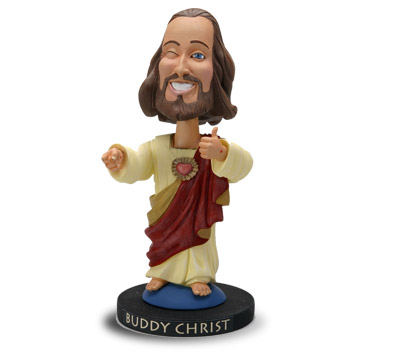
2. St. John of the Cross - In these days of the Buddy Christ it's okay to remember Christianity can occasionally be tough, miserable, and lonely.
3. E. E. Cummings - All the joy of Henry Miller with 99% less pornography!
THREE BOOKS NOBODY SHOULD READ (UNTIL PROPERLY WARNED)
1. American Psycho - This is meant to be some kind of indictment of 1980s decadence and an American society which creates monsters like the protagonist by continuously championing banality in all of its forms. For my tastes, it's really just a steaming pile of pretentious dog squeeze.
2. The Fountainhead - I'm sure this is arguable and just lost me the respect of a number of people, but for me this wasn't literature, it was pontification glossed over with a plot that stretches suspension of disbelief thinner than any sci-fi/fantasy novel I've ever read.
3. A Separate Peace - Okay, not really. But they forced me to read this in high school rather than Of Mice And Men. I've held it against the book ever since. And it is pretty boring, so there.
Well, that was a lot more long winded than necessary (as usual) but I muddled my way through. I can hear Devil Dog starting up now, so I'd best get back to my seat. Oh, I almost forgot, I'm supposed to pass the meme along to someone else. Hmmm, I've only traded a couple of comments with Ian Stewart over at Upper Fort Stewart, but he has a thing for books, so this should be a little easier for him than it was for me. Just in case he's not a regular visitor here, someone might want to let him know he's been memed.
Friday, 11 May 2007

Subscribe to:
Posts (Atom)